
The investment management industry is undergoing structural change. Margin pressure, accelerating flows to passive strategies and rising operational complexity are forcing firms to rethink not only how they invest, but how decisions are made and executed across the investment lifecycle.
Insights from the IMAS Investment Managers Outlook Survey 2026 show that operational efficiency is a clear priority for the year ahead. Investment managers consistently identify artificial intelligence as the most impactful development for their businesses, driven by its ability to enhance productivity, reduce costs and scale processes across investment, distribution and governance functions.
AI adoption is already reshaping fund management operations. From research and portfolio construction to compliance and client servicing, firms are deploying AI to automate repeatable tasks, improve decision consistency and increase speed of execution. These capabilities are becoming essential as managers operate in an environment of heightened volatility and tighter cost constraints.
The importance of disciplined decision making becomes even more pronounced when viewed through the lens of investor outcomes. Research from Capital Group highlights that long term outcomes are shaped less by individual market calls and more by repeatable, well governed decisions over time. In retirement income strategies, small changes in withdrawal rates, inflation assumptions and rebalancing discipline can materially affect sustainability, underscoring the need for robust frameworks rather than static solutions.
This governance perspective reinforces why efficiency is not merely operational, but central to decision quality. AI driven tools can support more consistent monitoring, dynamic adjustments and risk controls, helping portfolios remain aligned with intended outcomes as market conditions evolve.
Product innovation is advancing alongside these shifts. The growth of active ETFs reflects investor demand for efficient vehicles that combine active decision making with transparency and cost discipline. As highlighted in DWS research, enhanced active solutions are expected to become a major counterweight to the growing “passivation” of core portfolios in the years to come.
Looking ahead, the convergence of AI with technologies such as blockchain is expected to further strengthen fund operations. Distributed ledger technology can improve data integrity and process efficiency, while AI enhances analytics and oversight across the investment lifecycle.
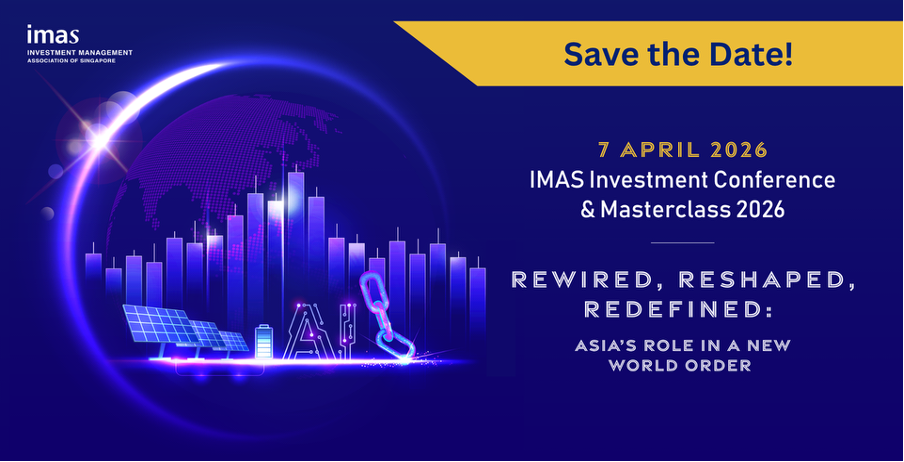
These themes will be explored at the IMAS Investment Conference and Masterclass 2026, where industry leaders, asset owners and regulators will examine how technology and governance are reshaping the future of fund management.