Recognition in Asia Asset Management’s Best of the Best Awards 2026 spans two related entities within the Nippon Life group. In Japan, Nippon Life Asset Management – recently introduced as the international brand for Nissay Asset Management Corporation – was recognised for Best ESG Engagement Initiative, Best Application of ESG and Best Climate Change Strategy. Separately, Nippon Life Global Investors Singapore won Best Performing ASEAN Equity (3 years). Together, the awards point to a group structure combining a long-established sustainable-investment platform in Japan with regional equity capability in Singapore.
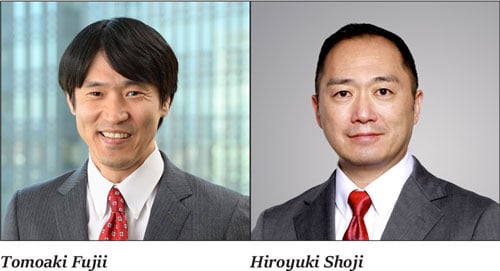
That group structure is central to a recent discussion with Tomoaki Fujii, co-chief investment officer & head of equity investment at Nippon Life Asset Management, and Hiroyuki Shoji, chief executive officer of Nippon Life Global Investors Singapore. Both describe an investment culture shaped by the group’s insurance heritage, long-term thinking and internal fundamental research. For Shoji, the phrase “A good investment for the future” is more than a slogan – it captures a broader philosophy linking financial discipline with a longer-term view of market development and capital allocation.
Sustainability as part of mainstream investment
For Nippon Life Asset Management, the three Japan awards are closely connected. Fujii traces the platform’s development back to the firm becoming a signatory to the Principles for Responsible Investment in 2006 and beginning to integrate environmental, social and governance ratings into its investment process in 2008. Since then, the framework has expanded across domestic and foreign equities and bonds, stewardship activity and climate-related investment practice.
“ESG is not treated as a separate overlay, but as part of mainstream research and portfolio decision-making where future cash flow is the key organising principle,” Fujii says.
He notes that the firm’s internally generated ESG evaluation is applied to both equities and corporate bonds, with higher ratings given to companies whose sustainability initiatives are expected to support future cash flows and stakeholder relationships.
“Our analysts conduct intensive dialogues with companies and make qualitative assessments based on direct research and engagement,” he explains. “Management teams receive detailed analysis of the challenges they face and possible measures to enhance value. More broadly, sector analysts maintain dialogue with around 250 priority companies, while proxy voting is also integrated into the research process. Research, engagement and stewardship form part of a single investment framework rather than separate functions,” he adds.
The climate strategy has a similar structure, measuring financed emissions across broader holdings with a target of reducing them by 50% between 2019 and 2030. Rather than excluding high-emitting companies automatically, Fujii says the firm remains invested where engagement may support transition. More than 70% of financed emissions are concentrated in around 70 holdings, making those companies a priority for dialogue. The firm has also developed transition funds intended to invest in companies where emissions reduction and operational improvement may, over time, help reduce risk premium and support returns.
Regional capability from Singapore
If the Japan business provides depth in sustainable investing, Nippon Life Global Investors Singapore adds a layer of regional equity capability. Shoji describes the Singapore operation as the group’s only overseas subsidiary and outpost in Southeast Asia, with responsibility both for managing regional equity strategies and for bringing broader group capabilities to local clients. He says the aim is not only to develop products, but also to build a stronger third-party business in asset classes relevant to investors in the region.
Shoji says the ASEAN equity award reflects the team’s ability to add value across different market environments rather than in a single favourable period. ASEAN markets, he notes, are exposed to a range of global influences, including energy prices, interest rates and geopolitical developments. “We are investing in uncertainty, always,” Shoji says. In that context, he believes, the goal is to understand the effect of those developments on countries, sectors and companies, and to identify both the risks and the opportunities that follow.
Shoji adds that the regional opportunity set extends beyond the themes dominating global market discussion. While much recent attention is centred on the US, including on artificial intelligence-related investing, he argues that locally grounded companies in ASEAN and broader emerging Asia also remain relevant from a long-term active-management perspective. The role of the investment team, in his view, is to identify potential winners, allocate capital selectively and remain disciplined on valuation.
Taken together, the group’s underlying message remains consistent: long-term investing, research-led decision-making and a closer integration of sustainability, stewardship and portfolio construction. Outside Japan, the Singapore business provides regional reach and local equity expertise. The result is a group model that combines domestic sustainable-investment depth with broader Asian market capability.