Demographics must be an important influence in evaluating investments in the future, both in terms of countries and industries. Although it seems obvious that it would be more rewarding to bet on countries with faster growing, younger populations, such as in Latin America and Africa and the Arab world, this has to be offset by political and currency instability and a lack of strong product innovation and management expertise.
The areas with falling and ageing populations such as Japan, Eastern Europe and other parts of the developed world may be less interesting from a macro viewpoint but contain first class companies which have global reach. The fact that China will soon have over 250 million people aged over 60 is a sobering reminder that even in the emerging markets there are healthcare and housing needs for this older generation, which are common to Europe and North America. There is always some investment opportunity.
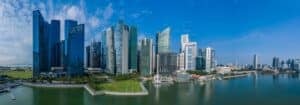
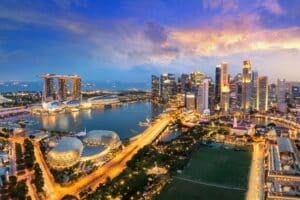
But this is not the whole story. One of our key criteria in Asia has been the development of human capital. For example in Singapore, where with a very small population, the government has invested long term in education, in science and in high tech industries with considerable success. We see the same nimbleness and long-term planning in places like Qatar today. The other criteria for long-term successful investment are:
a) Whether the history and culture of the country welcomes foreign investors and gives them a fair deal. This is often dependent on the colonial history of the country and whether there is a degree of xenophobia; for example in Vietnam, in South Korea to some extent, and even in Malaysia, whereas in Japan and Thailand, which were never colonised, foreigners are generally welcomed and given a fair chance to make and repatriate profits.
b) The existence of an entrepreneurial culture with risk taking and product innovation. This is also dependent on the universities and the clusters of talent typified by Silicon Valley, the City of London and to some extent by Hong Kong and Singapore. So far, despite the extraordinary success of both Chinese and Indian entrepreneurs in California, we have not seen, though we do expect to see, the same phenomenon arise in Shanghai or in Bangalore. The government constraints on individual success remain a formidable barrier to the willingness to strike out as an individual capitalist.
Looking at the global stock markets today, the biggest influence must be the rise in interest rates, which has begun to gather momentum in the U.S. and will have global repercussions. If we look back 30 years, we can see that rising interest rates are not always negative for equity markets, but they do tend to reveal the most vulnerable debtors, both countries and corporations – one consequence of the Fed tightening could well be further problems among the Mediterranean economies of the Eurozone.
Sudden declines across emerging market fixed income and currency markets are immediate consequences. Equally, U.S. treasury bonds in two months have lost considerably more than their annual interest coupons. We continue to be very cautious on the outlook for equities in the next few months. Not only rising interest rates but also the fragile state of China’s growth miracle, as it winds down, are our main worries.
China has increased its ratio of credit to GDP by 75% since 2008, and it now accounts for nearly 200% of GDP. Liquidity conditions have clearly tightened, as we saw from the jump in the Shanghai interbank offered rate. The rate of growth in the economy is also slowing sharply.
This will have consequences for all of China’s trading partners, especially commodity suppliers, and will curtail the flow of capital from China into many areas of real estate, art and overseas investments –trade figures were recently announced showing a 3% year on year fall in China’s exports, and a 10% fall in imports since last month. The new Prime Minister Li Keqiang has repeatedly confirmed that no stimulus will be forthcoming. The labour market appears robust, with the working age population now shrinking, and strong wage growth up 71% since 2008, plus 25% Yuan appreciation: U.S. labour costs relative to China have fallen by 56% over the past 15 years, and hence many U.S. manufacturers are bringing home production, which was outsourced to China after its WTO entry in 2000. That era is now over.
A deflationary wave, which we saw starting in raw material prices (and has been reflected for example in Western Australia in the resource and mining business) is now spreading to retail and manufacturing, led by the intense competition among Chinese producers who are being squeezed by a strong RMB and higher labour costs. According to Fitch, the “China credit bubble today is unprecedented in modern world history”.
But the Chinese consumer remains a key focus of our investment research, even though it has not been easy to identify the winners in retailing, in food and beverage, in clothing or shoes. One area which I identified 20 years ago in The East West Pendulum is the new freedom for Chinese to travel, especially overseas. The Financial Times reported last week that “last year alone more 83 million Chinese spent US$100bn travelling overseas, making them the world’s biggest spenders on foreign travel. For nearly 60% of them, it was their first time outside China”. This is certainly an investment opportunity with great growth prospects.
Myanmar continues to be an extraordinary exception in a world of declining growth and deflationary expectations. Here is a country of 60 million, which has been isolated for 50 years, where we now see the possibility of the national income quadrupling in the next 20 years. This week alone we have seen major announcements by Coca-Cola, by Unilever, by Nortel (Norway Telecom), and Qatar Telecom to invest billions of US dollars in food and beverage, as well as the mobile phone business there. This, more than any other news, politically or economically, convinces us that the change in Myanmar is for real, and that major international companies are making large bets on the future there.
*Robert Lloyd George is the investment chairman at Lloyd George Management