

Canada’s Sun Life Financial Inc selectively outsources investments in asset classes such as private equity which fall outside its core expertise.
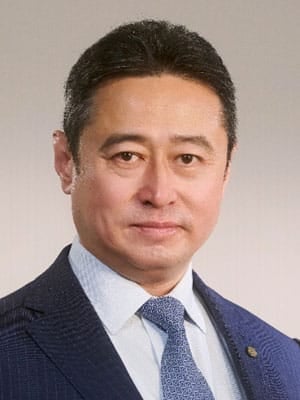
Most of the insurer’s C$1.6 trillion (US$1.17 trillion) in insurance-related assets are managed internally through its units SLC Management and MFS Investment Management, leveraging their particular capabilities, according to Benjamin Deng, president for Asia asset management at Sun Life.
MFS Investment’s expertise is in public markets, particularly stocks and mutual funds in North America.
Meanwhile, SLC Management is strong in fixed income and private debt, through its alternative investment unit Crescent Capital.
“This has positioned us as a leading originator in private credit, supporting stable income generation and attractive risk-adjusted returns for policyholders,” Deng says in an interview with Asia Asset Management.
He says the company seeks external managers with “unique capabilities or access” to enhance investment outcomes.
For example, its Hong Kong Mandatory Provident Fund business operates under an open-architecture model that combines internal capabilities with external managers across asset classes, investment styles, and market segments.
“Our principle is to use internal strengths and scale wherever possible, and to outsource selectively where external expertise can improve results,” Deng says.
Digital assets
Sun Life deems digital assets as investable within its insurance portfolio, subject to regulatory constraints and internal risk management policies. It uses a three-pronged framework that bars investing in assets that cannot be clearly priced, and also avoids assets with risks that cannot be managed on an ongoing basis or which lack a clear exit strategy.
“Digital assets are something we continue to monitor and analyse,” Deng says. “But we apply these criteria because concerns around valuation, volatility, and liquidity remain.”
“We will continue to monitor and analyse developments, but will only consider allocations if pricing, risk controls, and liquidity are sufficiently clear,” he adds.
Disciplined approach
According to Deng, Sun Life’s portfolio rebalancing strategy is grounded in a long-term, disciplined approach that prioritises risk diversification and volatility management, especially during periods of macroeconomic and geopolitical stress.
The insurer maintains a diversified mix of investment strategies, sectors and styles to mitigate concentration risk and support sustainable income generation and yield enhancement.
“We also place a strong emphasis on forward-looking research, particularly in macroeconomic, geopolitical, and sector fundamentals,” Deng says. “This approach enables us to evaluate a range of potential risk scenarios and adjust our portfolio positioning thoughtfully, rather than reacting impulsively to market volatility.”
He says the company has selectively overweighted high-conviction areas, which have contributed to capturing returns while maintaining resilience. It’s a strategic positioning that combines top-down macro analysis with thorough sector research.
Sectors such as base metals, information technology, new energy, and healthcare are currently on Sun Life’s radar.
On AI
According to Deng, the company employs a “stringent and well-established” risk management framework to ensure that its strategic asset allocation remains aligned with long-term liabilities.
“Our risk management practices have been tested across multiple cycles,” he says. “For instance, during the 2008 global financial crisis, our disciplined risk management and asset-liability matching practices demonstrated their resilience and effectiveness.”
The insurer also integrates artificial intelligence and advanced data analytics into various aspects of its investment process, including market research, credit and equity analysis, compliance checks, and evaluation of external fund managers.
“We view artificial intelligence as an enabler rather than a substitute for judgement,” Deng says. “We do not blindly trust artificial intelligence-generated outputs. All such outputs undergo rigorous validation and are reviewed against our investment principles, as our focus remains on disciplined, experience-based decision making.”