Korea Investment Management’s versatility and creativity in exchange-traded fund offerings has earned the company Asia Asset Management’s 2026 ETF Awards for Commodity ETF of the Year for Korea and ETF Manager of the Year for Korea.
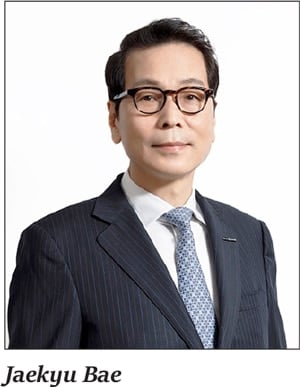
In an interview with AAM, Jaekyu Bae, chief executive officer of Korea Investment Management, tells how the company diversifies its ETF product lineup by introducing thematic funds focused on sectors such as semiconductors, artificial intelligence, and nuclear energy. He also explains how the company is enhancing these products to better meet investors’ long-term asset allocation needs.
Can you describe Korea Investment Management’s approach to developing ETFs?
Our core philosophy is customer-value orientation. We believe that the company can only grow when our customers profit, so we adhere to the investment principle of long-term investing in future growth.
Our role is to guide retail investors, who may find individual stock volatility challenging, towards areas where global wealth is concentrated through ETFs, which we consider the most rational investment vehicles.
This philosophy is clearly reflected in our artificial intelligence and big tech products. Based on the understanding that industries building infrastructure are the first to profit during the early stages of technological innovation, we have developed products that proactively target core industries such as semiconductors and nuclear power, key pillars of artificial intelligence infrastructure. Our products, such as ACE Global Semiconductor TOP4 Plus and ACE US Big Tech TOP7 Plus, are ETFs that select and focus on only the leading companies within industries poised to drive future growth.
Please provide an overview of the company’s history in ETF development
Although the domestic ETF market took 20 years to reach 100 trillion won (US$68.8 billion) in net assets after its first listing in 2002, it is now experiencing an unprecedented growth surge. Recently, the market expanded from 300 trillion won to 400 trillion won in just three months. While historically focused on products tracking major indices, the market is now evolving to accommodate “money moves” through pension accounts and to meet the efficient investment needs of the younger generation.
In 2022, we rebranded our ETF business as “ACE” and strengthened our lineup around structural growth stocks with long-term upward trajectories, including artificial intelligence, semiconductors, and nuclear energy.
By expanding our range with customer-focused thematic products, we are contributing to the qualitative growth of the market. As a result, our ETF net assets, which were approximately 3 trillion won at the time of rebranding, have increased tenfold to over 33.8 trillion won today.
How diversified are your ETF products across different sectors and asset classes?
Currently, ACE ETFs offer a comprehensive lineup, spanning domestic and international representative indices, thematic investments such as semiconductors, dividends, and spot-asset funds, as well as long-term treasuries and bond-equity hybrids to create well-rounded portfolios. Recently, we have also focused on expanding our competitive domestic products to meet the surging local market demand.
Notably, the ACE Global Semiconductor TOP4 Plus ETF targets companies that maintain dominant market positions by forming bottlenecks in high-difficulty industries. This product emphasises exposure to the “artificial intelligence core value chain” over legacy firms, aiming to directly capture the benefits of the artificial intelligence cycle.
The ACE Nuclear Top 10 ETF, launched domestically in June 2022, has demonstrated strong performance, with one-year and three-year returns of 296.71% and 700.52%, respectively. Its cumulative return since inception stands at 660.41%. This ETF employs an equal-weighted approach based on market capitalisation and artificial intelligence-based similarity scores to determine weights, allowing for concentrated investment in the top ten core nuclear companies, with a maximum stock limit of 25%.
What are the key strengths that differentiate Korea Investment Management’s ETFs from its competitors?
When developing our products, we avoid betting on short-term trends or mere forecasts. Instead, we focus on providing a long-term profitability outlook grounded in solid business logic. For example, our semiconductor ETFs are designed to encompass the entire global value chain rather than being biased towards a single process.
Additionally, I am actively involved in investor education. Many investors buy high-quality products but struggle to withstand market volatility. I strive to convince them of the importance of long-term investing in these industries. Our guiding principle is to build partnerships by educating clients to understand value and manage volatility, rather than solely focusing on short-term AUM growth.
How has investors’ appetite for passive investment changed this year, and how does the company capitalise on this trend?
Recently, as long-term asset allocation through pension accounts has become more prevalent, a culture of dollar-cost averaging into sectors with sustained long-term growth, such as the Nasdaq 100 and the semiconductor value chain, has gained momentum.
In response, we aim to enhance the function of ETFs as valuable long-term investment tools by consistently focusing on mega-trends like artificial intelligence and technology, combined with innovative structural designs. We plan to deliver highly sophisticated products that balance exposure between semiconductor infrastructure and platforms, enabling investors to remain resilient amid temporary market noise, such as concerns over an “artificial intelligence bubble”.
Our ultimate goal at Korea Investment Management is to support our investors in concentrating on their careers and self-development, helping them achieve both prosperity and prestige, while ACE ETFs manage their wealth with stability and foresight.